“Why Did You Do That”: Player Approaches in Puzzle Game in Relation to Player Taxonomy
Abstract
“This study investigates how players, categorized by Bartle Taxonomy, approach and engage in the critically acclaimed puzzle game The Witness. Using think-aloud protocols and post-gameplay interviews, we analyze cognitive processes, emotional responses, and strategies to identify the unique motivators for different player types in puzzle-solving environments.
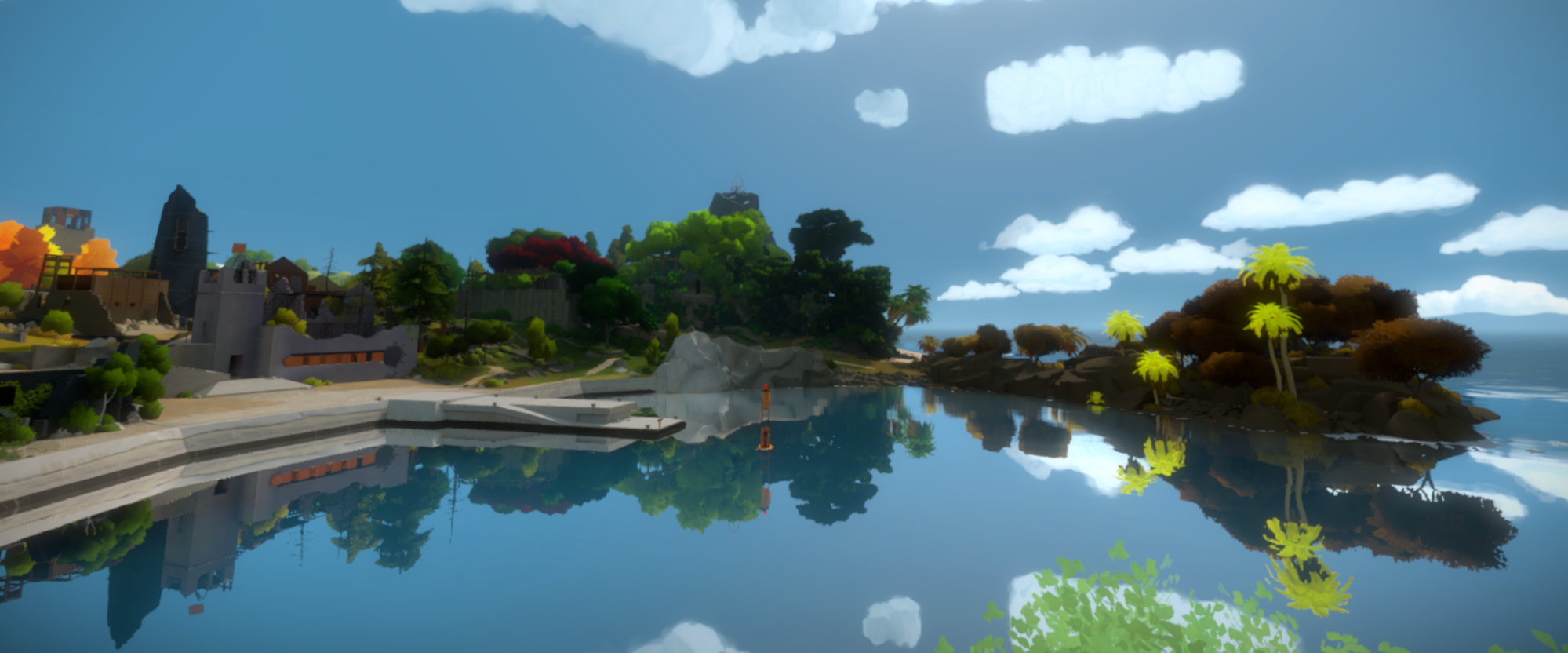
Figure 1: The Witness gameplay screenshot. This scene is expected to be seen by players once they leave the entry area.
1. Abstract
Puzzles are integral to almost every game genre. Research exploring why puzzles resonate with some players while alienating others is limited. While existing research utilizes player taxonomies to understand general gaming preferences, it often falls short of providing actionable insights into game design. This study bridges this gap by investigating how players, categorized by Bartle Taxonomy, approach and engage in the critically acclaimed game The Witness [Figure 1].
Using think-aloud protocol playtests and post-gameplay interviews with 14 participants categorized with Bartle Player Taxonomy, we analyze player behaviors, strategies, and motivations in relation to their taxonomy. By examining their cognitive processes, emotional responses, and design perceptions, we aim to identify what makes each taxonomy “tick” when it comes to puzzle-solving. This research ultimately seeks to provide designers with a guide to creating more engaging puzzle games tailored to attract and resonate with any and all of these taxonomies.
2. Introduction
Does your average gamer consider the same information when playing games? Are some players predisposed to a positive or negative outlook in certain genres or in general? The creation of an engaging game is a delicate balance between business and art, science and emotion, seriousness and fun. Successful game studios often spend months, even years, fine-tuning their game mechanics around the expected target audience. Over the past decade, significant research has begun to surface, seeking to answer the question: how can we predict the ways in which a player will operate? Often, player demographics are bundled together into age and gender-conforming data and largely do not consider player personalities to help predict their interest, engagement, and thought patterns.
This paper seeks to shed light on an important hanging question: can designers predict and create the ideal game design patterns for a target audience through player taxonomy and preference? Building on previous work in player taxonomy [4], their preferences, and applying them to active puzzle-solving situations, we seek to discover the answer.
Our study of The Witness and post-gameplay interview shows emerging patterns in player preference and decision-making based on Bartle’s [4] delineation. In pursuit of these answers, we administered a recorded think-aloud play session of The Witness and a recorded post-play interview to 14 participants. From there, we transcribed the interviews to text and applied open, axial, and selective coding methods to determine player sentiment both during and after the session.
The results of our study uncover a deeper understanding of player preferences and disposition when it comes to environmental puzzle games. They help to highlight what kinds of elements a game could seek to include to create a bespoke experience that is tailored to engage specific audiences. Additionally, it uncovers room for significant future study in terms of applying alternative taxonomy [1] and applying the same rigor to additional game situations, ranging from games featuring non-player character interaction and competitive elements to determining the shifts in player preference and sentiment.
3. Related Work
The purpose of our study is to apply commonly used and accepted taxonomy methods to uncover similar actions and interests that players of similar gamer personalities have. We plan to utilize the exploration and puzzle game The Witness to utilize a player’s reasoning and decision-making skills under time constraints to help expose these thought patterns. The ideal outcome is to identify repeatable gameplay practices, habits, and patterns among individual taxonomies for the purposes of directly applying this to game design.
HCI scholarly publications often seem at odds with the proper methods by which to evaluate player interest, enjoyment, or decision-making. Nacke et al. [1] break down eight different methods and describe everything from more popular personality classifications like Briggs-Meyer and Bartle to Caillois’s [2] method of determining player persona. Nacke [1] compares these eight methods to BrainHex, a neurobiological typology, and speaks to its benefits as being more broadly applicable to player performance and persona. Schneider et al. [3] create their own taxonomy with a Likert scale to attempt to fit their players into Bartle Taxonomy [4]. Quick [5] also uses the Likert scale to determine self-reported actions in a theoretical survey to determine predicted player preferences. Santos [6] again takes player taxonomy and applies it to ‘gamification designs,’ or simulated game situations. Klock [10] primarily focuses on a meta-analytical literature review. The primary drawback with these [1][2][5][6][10] is their inability to apply survey and interview data to actual gameplay.
Brocklebank [8] stands out in terms of social preferences and uses ‘simple games,’ or economics game theory puzzles, to try and predict outcomes by personality types. Lopez [7] applies the ‘Hexad’ framework, as mentioned in Nacke [1], Tondello [9], and several others, to apply a player taxonomy but then tests player actions in a simple Kinect movement game. None of these [1][7][8] fit our definition of utilizing reasoning and decision-making to expose their thoughts. The Witness is a highly rated and awarded puzzle game lauded for its complex mechanics and engrossing visual aesthetic to hopefully yield a result more easily applied to game design. Our goal is to take relevant taxonomy practice through Bartle Taxonomy [4] and move past what others [1][7][8] stop short of and intentionally put players into active gameplay situations where they must verbalize their active thought processes in resolving game situations, discover context clues, and identify reactive activities and interests in these players.
4. Method
We conducted our data collection with 14 participants aged 18 to 30 who had some gaming experience and had not played The Witness. The data collection is formed with 4 phases. We included an informed consent form, a quiz, a playtest, and an interview in the data collection process. In the informed consent form, we introduced our experiment process to participants and explained process issues that may influence the process. The quiz is the Bartle Player Taxonomy [4] test. The playtest is a 10-minute (or any time per participant preference) playthrough of The Witness. A series of predetermined questions form the interview. We recorded playtest videos and interview dialogue, transcribed the spoken dialogue within the playtest and interview recordings, and anonymized them.
Our data analysis consists of two parts. First, we conducted a qualitative analysis of the playtest videos and transcriptions. We analyzed the playtest video transcriptions based on how participants commented on their experience and the game. That process is detailed in section 4.2. We conducted coding on the interview transcriptions, progressing from individual open coding to group axial and selective coding in that order. Further details can be found in section 4.3.
4.1 Data Collection
To maintain the integrity of the data, that is, to ensure that answers from the participants are not influenced by the interviewers or the data collection process, we designed our data collection process based on two principles: minimum interference and maximum understanding.
In the informed consent form, we stressed that the participant could stop at any time if they felt like it without needing to do so for any reason. In addition, we also mentioned to participants that the goal of this experiment is only to observe player activities and not how well participants perform in the playtest. Thus, it is up to the participants to keep playing or not, to solve a puzzle or not, where to go, what puzzle to solve, and how to solve each puzzle. Participants are allowed to do anything other than directly asking interviewers for answers, even searching online.

Figure 2: Bartle Player Taxonomy categorizes players based on “Acting vs. Interacting” and “World vs. Player.”
The Bartle Player Taxonomy test is commonly used to categorize players (Figure 2) [4]. For this project's scope, we recognize that the 4-way categorization of the Bartle Player Taxonomy is enough for making behaviors in participants distinguishable for our purpose. We recognize the concern that there could be an influence on participants' behavior out of a self-fulfilling prophecy effect. To prevent participants from being influenced by their taxonomy results, we specifically asked participants not to reveal the results to themselves or the interviewer until the end of the data collection process.
Figure 3: A typical puzzle in The Witness. 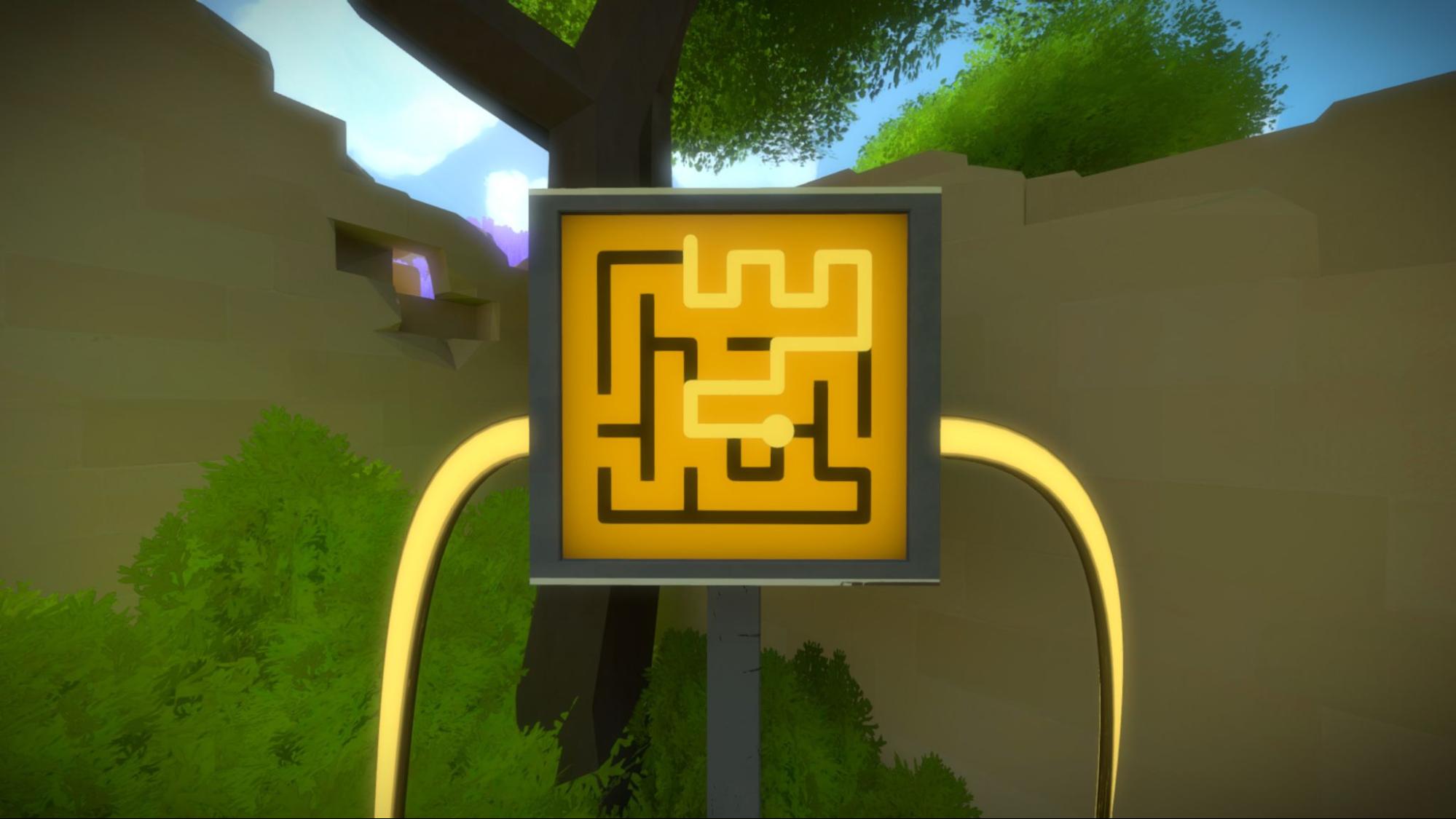
The playtest is designed to be 10 minutes of playing the game The Witness. The Witness is a well-praised puzzle game with a score of 87 out of 100 from 83 game media reviewers on Metacritic and an 85% positive review from 14264 players on Steam (data recorded on Oct. 10, 2024). We chose The Witness because of its puzzle logic, simplicity, and experience controllability. A typical puzzle in The Witness is drawing a line from the beginning to the end on a board under certain rule(s) (Figure 3). The same logic is shared across the entire game.
During the playtest, we encouraged “Think-Aloud” practice (if it is comfortable for the participants) to assist the interviewer in capturing data points. We avoided any direct instruction, comparison, solution, etc., from the interviewer. Although the playtest is only designed to be 10 minutes, it can be shortened per the requirements of the participants. Most of the participants did not stop playing after 10 minutes and asked for an extension.
We designed a list of questions for the interview, as shown in Appendix 1. In order to maintain the integrity of participants’ answers, we minimized the potential influence on participants from the data collection process. Unless it is a question that requires a binary response, we deliberately avoided any hint for answers and any questions with answers embedded. Questions that require binary answers or might provide participants with any hint about their experience or reflection are intentionally moved to the end of the list. In addition, we allowed participants to speak freely on any subject they felt like talking about, and we did not terminate any conversation until participants indicated that they had nothing more to say. Interviewers could also ask supplementary questions under the same principle of minimizing influences if they notice anything interesting or unclear. When interviewers received any answer, they confirmed their interpretation of that answer with the participant.
In addition to the standard process, interviewers were required to take notes on noteworthy behaviors during the playtest and the interview that did not fall into any of the questions from the interview question list. For example, interviewers will take notes on whether a participant abandoned any puzzle, its frequency, and the duration of their attempt before abandoning it.
4.2 Playthrough Qualitative Analysis
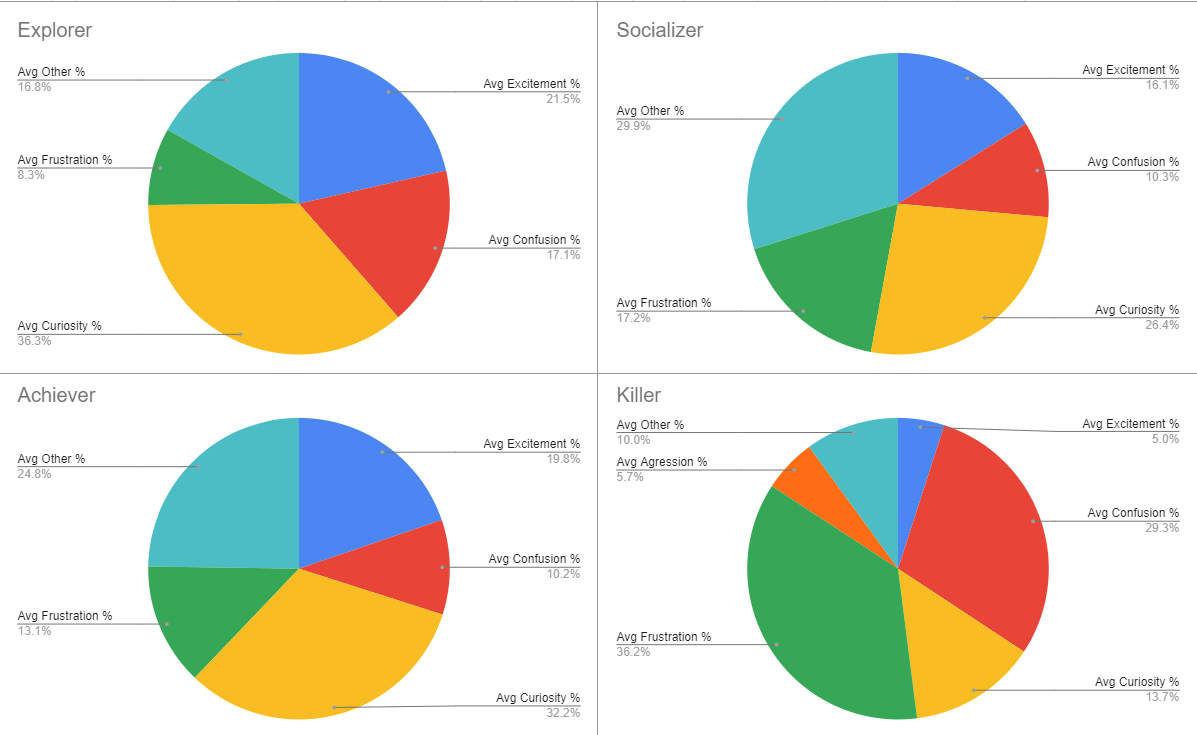
We conducted a qualitative analysis of the playtest transcription. We analyzed the transcription to determine the comments from participants on their experience and the game. We focused on the duality of the comments and also categorized comments based on general emotions. We gave “Positive,” “Negative,” or “Neutral” labels and categorized them into “Excitement,” “Confusion,” “Curiosity,” “Frustration,” “Aggression”, and “Other.” We counted the number of comments under each label and category from each participant, and normalized the number by calculating their percentage in relation to the total amount of comments that participant made. We then calculated the average of the percentage of each label and category for each taxonomy.
4.3 Coding
Following data collection, the audio recordings of both the think-aloud sessions and post-gameplay interviews were transcribed verbatim. Each team member conducted open coding independently. In this process, one member used QualCoder, an open-source qualitative data analysis software, while the other two members employed the commenting features within Google Docs. After merging redundant codes, this initial open coding phase yielded a comprehensive collection of 98 distinct codes (Appendix 6).
5. Results
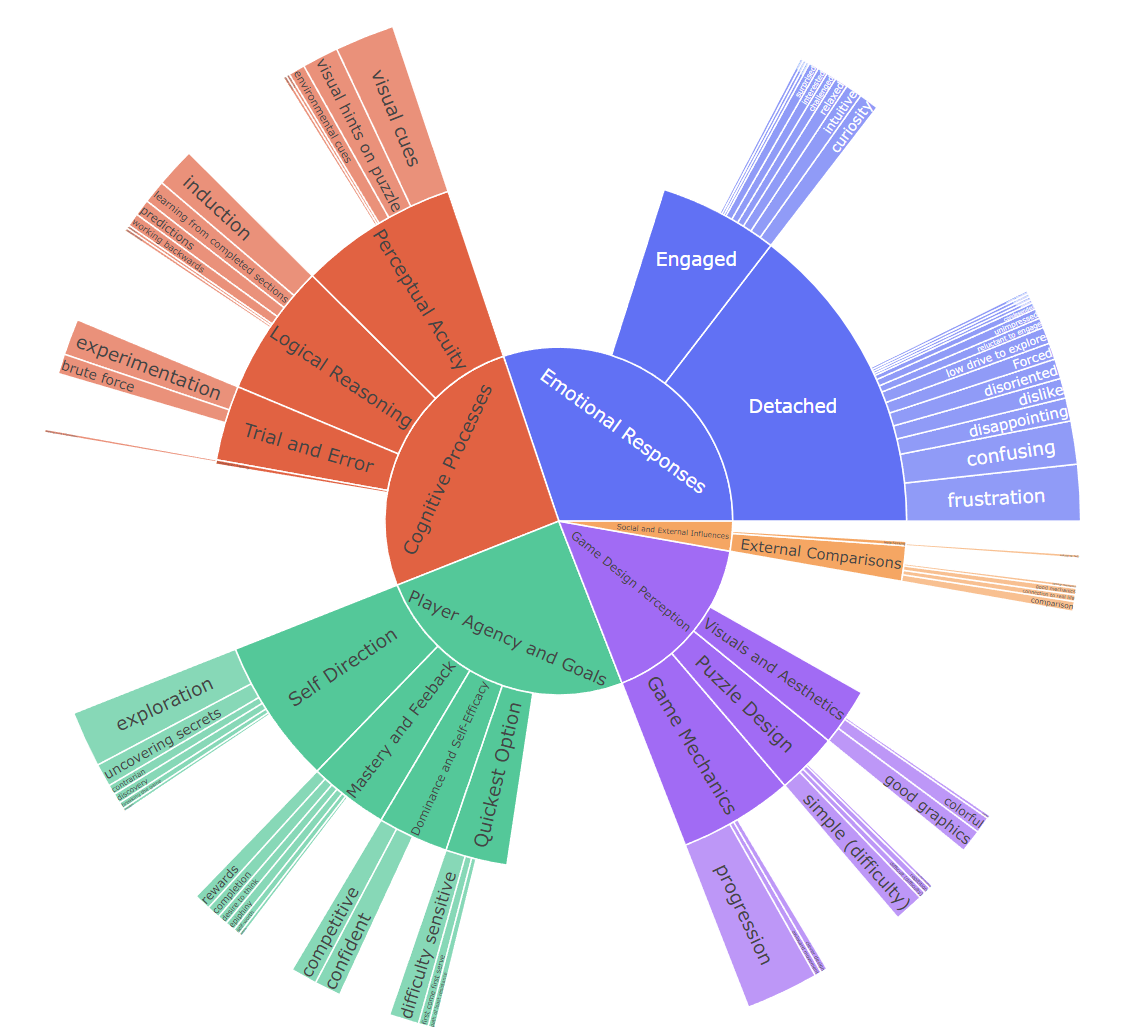
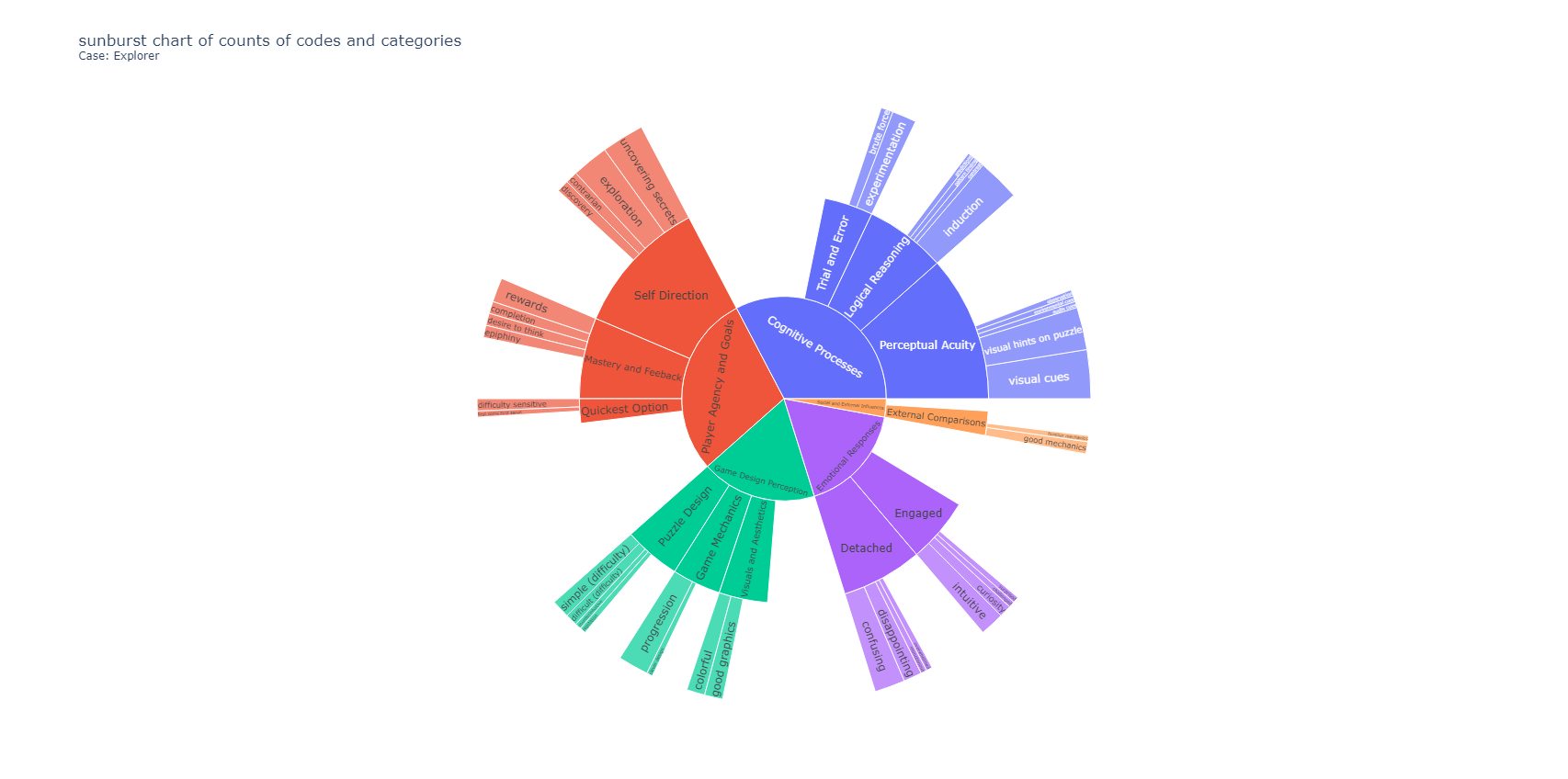
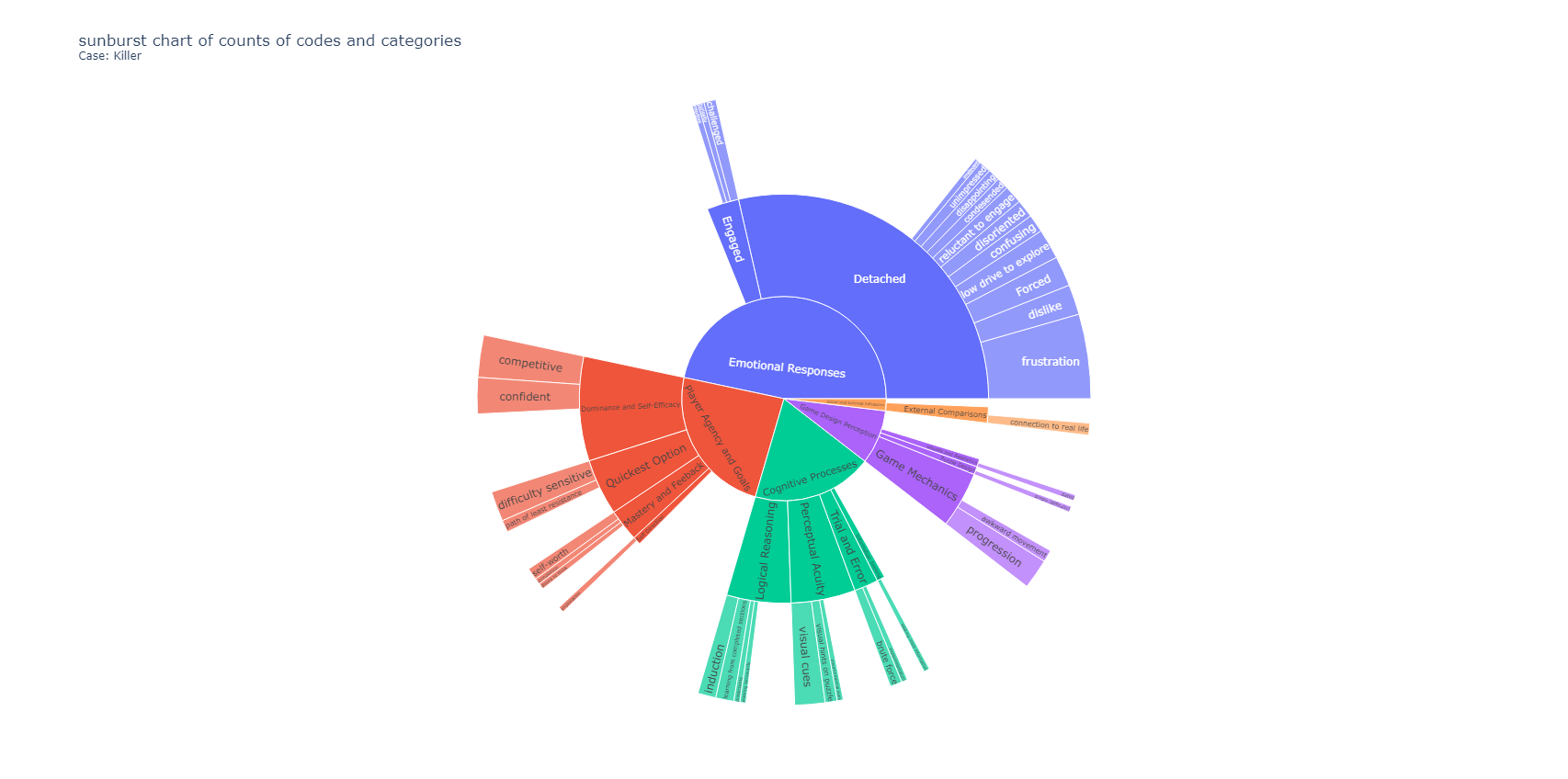
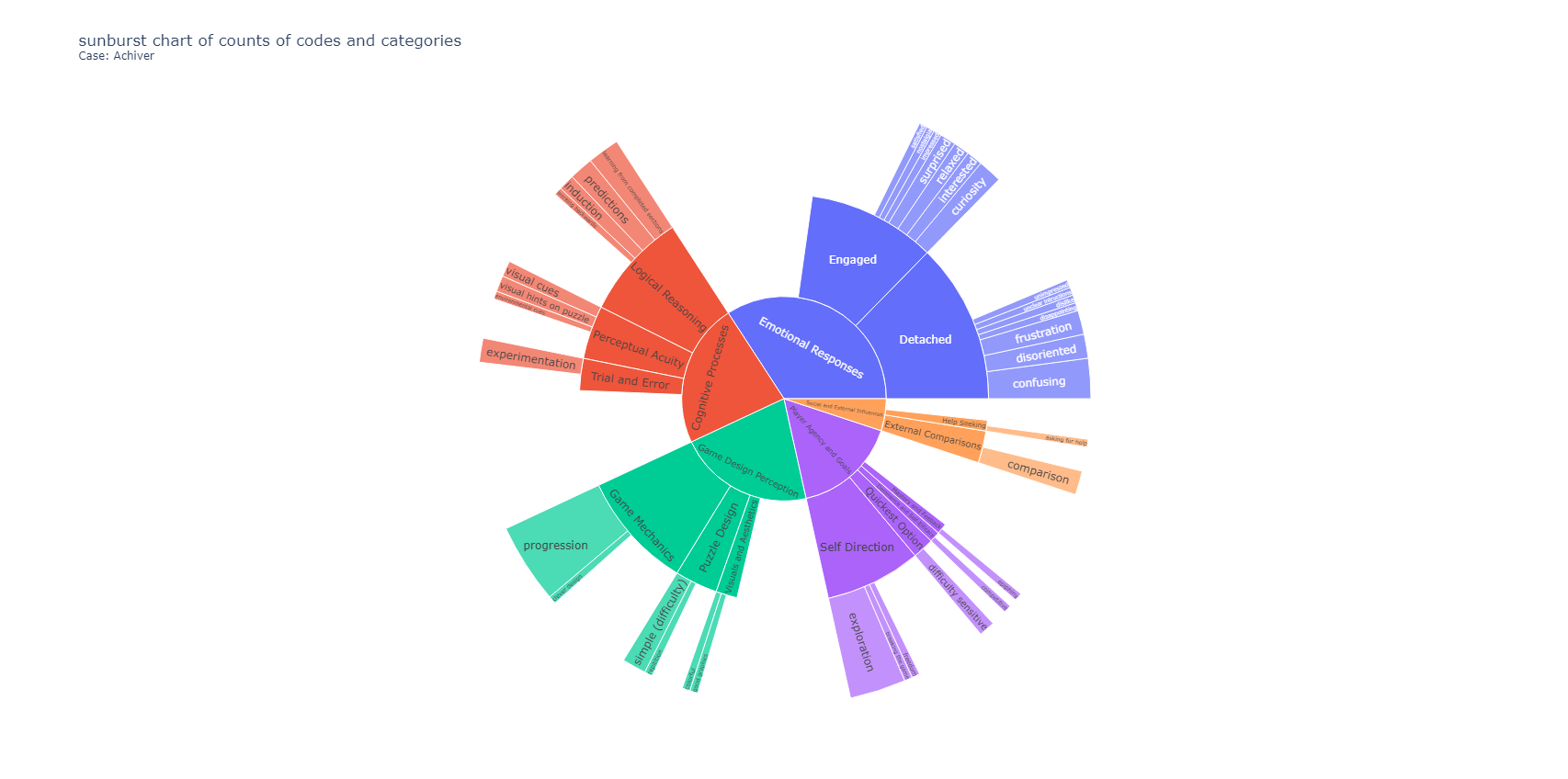
To aid in theme exploration, we generated exploratory sunburst diagrams (Appendix 7) for each taxonomy and heatmaps using all 98 open codes. These visualizations aided us in identifying potential connections and relationships between codes, paving the way for the axial coding phase.
During axial coding, we grouped the open codes into five main categories: Cognitive Processes, Emotional Responses, Game Design Perception, Player Agency and Goals, and Social and External Influences. Each category was further divided into subcategories to provide a more nuanced understanding of the data. The subcategories were as follows:
- Cognitive Processes: Information Seeking, Logical Reasoning, Perceptual Acuity, Trial and Error
- Emotional Responses: Detached, Engaged
- Design Perception: Game Mechanics, Puzzle Design, Visuals and Aesthetics
- Player Agency and Goals: Dominance and Self-Efficacy, Mastery and Feedback, Quickest Option, Self-Direction
- Social and External Influences: External Comparisons, Help Seeking
For selective coding, we used the four player taxonomies as our core categories for concept map construction. This approach allowed us to explore each taxonomy’s relationship to each of the main categories, as well as their primary focuses for each category. By examining these relationships and the nuances within the open codes, we aim to provide a comprehensive understanding of the interplay between player taxonomies and their approaches and engagement with puzzle games.
After the coding process, we identified the most frequently mentioned subcategories for each taxonomy and related open codes. We also generated a final sunburst graph for each taxonomy to preserve more nuances.
5.1 Killers
Killers consistently demonstrated intense detachment during gameplay sessions (Appendix 6). Both participants in this category exhibited exclusively avoidant and detached sentiments throughout gameplay and interviews. This detachment stems from their frustration with the game's movement system. The absence of a jump button and the sluggish character movement frequently disrupted player focus, leading to uniquely intense feelings of frustration, dislike, and disorientation.
5.2 Explorers
While Explorers demonstrated a high level of engagement with the game, they also exhibited an unexpected degree of detachment (Appendix 6). This apparent contradiction stemmed from a disconnect between their successful exploration and their perceived lack of reward for those efforts. Although they uncovered hidden paths and areas, they expressed expectations for more tangible rewards for their endeavors, such as new abilities, enhanced visual or audio feedback, or collectible items. One participant even pondered the possibility of the puzzles themselves serving as a reward, though the prospect failed to elicit much enthusiasm. This suggests that for Explorers, the thrill of discovery is intertwined with a desire for tangible progress and a sense of accomplishment.
In contrast to the Killers' reliance on trial and error, Explorers were eager to engage with the designer's intended cues and hints. They exhibited a keen sensitivity to visual and auditory cues, both within the puzzle mechanics and the surrounding game environment. Notably, they consistently outperformed other player types in their quick comprehension of puzzle mechanics, demonstrating a remarkable ability to decipher the designer's intentions.
5.3 Achievers
Similar to Explorers, the Achievers also exhibited mixed emotional responses to their experiences. They were curious, relaxed, and interested when they were engaged, but the game’s perceived lack of instructions, directions, and guidance often left them confused, disoriented, and frustrated (Appendix 6). Some of our Achievers were unique in that all participants expressed appreciation of the designer’s intention and guidance but were unimpressed with the execution and implementation.
While Explorers excelled in their perceptual acuity and sensitivity to the designer's subtle cues, Achievers relied more heavily on logical reasoning. They were the only participant group who consistently demonstrated the ability and tendency to predict future events within the game and to explicitly verbalize learning from completed sections. While Explorers derived satisfaction from uncovering secrets, Achievers found fulfillment in progression, particularly through increases in difficulty. They also readily articulated inductive reasoning processes, showcasing a preference for systematic problem-solving. However, their apparent lack of the same perceptual acuity as Explorers sometimes led to frustration, disappointment, and confusion stemming from a perceived lack of information.
5.4 Socializers
Socializer participants were notably the most articulate and verbose of all groups. They used minimal filler words and readily expressed their thoughts in complete sentences, often extended into detailed paragraphs, all while maintaining active engagement with the gameplay (Appendix 6). During interviews, they rarely paused to reflect on their responses, instead engaging in a fluid stream of consciousness. This suggests a pre-existing inclination, or perhaps even a desire, to share and communicate their gameplay experiences both during and after play sessions.
6. Discussion
Our final results confirmed our hypothesis that different player taxonomies tend to exhibit distinct approaches and have unique factors influencing their level of engagement with puzzle games.
While the result table in Appendix 6 provides a good overview of the priorities of each taxonomy, a closer examination of the unique composition of open codes, the composition of five main categories, and secondary subcategories unravel more details behind the priorities and reactions and further differentiates the taxonomies.
6.1 Killers
Killers often displayed a complex reaction to the designer's intended cues and hints. While they acknowledged the designer's intention to guide them, they expressed frustration, perceiving these cues as patronizing and condescending. They related these cues to unpleasant real-life experiences, such as "having to game the professor's requirements," and expressed that they "wished the game had just told them what it wanted." This resistance highlights an interesting dichotomy between designer intention and player perception. In attempting to avoid excessive hand-holding and encourage player-driven discovery, the designer may inadvertently leave players feeling frustrated and robbed of their agency. This suggests that designers must carefully consider how guidance is presented to avoid undermining players' sense of autonomy and intellectual engagement, particularly for those who identify with the Killer player type who value a sense of challenge and mastery while also tying their sense of self-efficacy to their ability to do so.
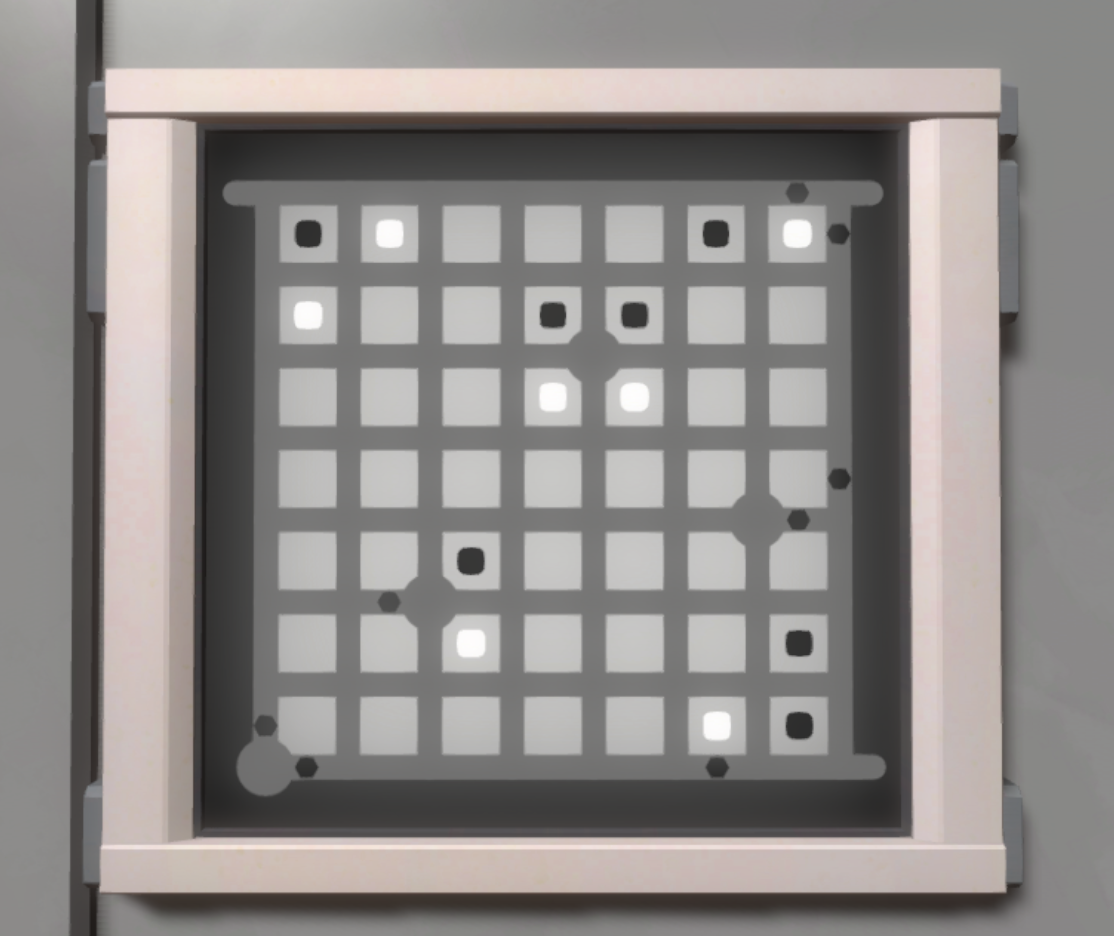
Figure 4: A puzzle in The Witness. Players are expected to draw a line that covers all black dots, and separate squares with different colors. A Killer noted that when you draw across a dot in the above puzzle, it was ‘killed’ and grayed out.
Another defining characteristic of Killers, supported by Nacke [1], was their relentless pursuit of dominance over other players. Both participants frequently checked in with interviewers regarding their progress and explicitly asked to be compared to others. They were also insistent on finishing the puzzle sections they were attempting, even after exceeding the time limit. Interestingly, they showed minimal interest in exploration, claiming to be "unaware" of alternative options even when presented with them. Their focus on the quickest path seemed solely aimed at surpassing other players, with frequent mentions of sensitivity to difficulty and a preference for the path of least resistance. This drive for mastery was deeply connected to their sense of self-worth and self-efficacy, as evidenced by their comments linking game completion to personal achievement.
This emphasis on competition and mastery aligns with Killers' desire to act upon and surpass other players [4]. In a follow-up interview, one participant commented that a leaderboard system would further increase their frustration. They believed the perceived awkwardness of the movement and interaction mechanics hindered their ability to perform optimally, potentially affecting their standing in such a competitive system. This highlights the importance of well-designed core mechanics in games targeting Killers.
When designing puzzle elements for Killers, developers should prioritize both puzzle quality and the overall polish and intuitiveness of game mechanics, adhering to current design standards. Sluggish controls or unintuitive interactions can detract from the experience and lead to frustration, especially for players focused on efficiency and mastery. Designers might also consider implementing mechanics to track progression and completion, with an emphasis on the player's physical skill, such as average completion speed and improvement with each puzzle. Such features could provide a sense of accomplishment and cater to the Killer's desire for quantifiable progress and self-evaluation.
6.2 Explorers
Explorers placed considerable emphasis on the self-directed nature of their gameplay. Unlike the Killers, who tended to follow the most obvious path, Explorers often deliberately strayed from it. They frequently cited motivations such as uncovering hidden secrets, exploration, expressing their contrarian tendencies, and testing the boundaries of the game's design. This inherent drive for autonomy, coupled with their desire for mastery and recognition, explains the seemingly paradoxical nature of their emotional responses.
While it might be tempting to assume that Explorers would be content with a vast, open world, our findings suggest a more nuanced perspective. They do not explore merely for the sake of exploration; rather, they require feedback and acknowledgment to validate their efforts. Designers must, therefore, cater to this need by rewarding their unorthodox approaches and perceptual acuity with tangible feedback, creating an intricate dance between independence and validation.
Effectively engaging Explorers requires designers to strike a delicate balance: fostering a sense of self-directed discovery while providing meaningful rewards that acknowledge their ingenuity [4]. This involves crafting an environment where players feel they are consistently outsmarting the game, demonstrating their unique perceptiveness and unconventional thinking while ultimately ensuring that the designers retain the upper hand in this playful battle of wits.
6.3 Achievers
Compared to the previously discussed player types, Achievers were more receptive to external and social influences. While Explorers valued independence, Achievers prioritized completion above all else. This prioritization influenced their willingness to utilize any available method to achieve their goal. During gameplay sessions, they employed strategies rarely observed in other groups, such as seeking assistance from researchers, expressing a desire for external guides or cheats, [3] and drawing inspiration or comparisons from other games. While pragmatic exploration in pursuit of collectibles deemed essential for completion was observed, they generally favored the path of least resistance—the most efficient route to finishing the game.
When designing puzzles for Achievers, developers should cater to their desire for logical reasoning by prioritizing clear mechanics and ensuring that necessary information is readily accessible. This allows Achievers to focus their cognitive efforts on solving the puzzle itself rather than deciphering its underlying structure. They need to feel a sense of intellectual accomplishment, overcoming challenges with their intellect rather than struggling with unclear objectives or tedious tasks. Designers must also carefully manage the progression of difficulty. A slow progression can lead to uncertainty and a lack of direction, while an overly steep curve may result in frustration and a reliance on shortcuts to achieve their goals.
6.4 Socializers
Interestingly, the Socializers' collection of codes reflected tendencies observed across all previously discussed taxonomies. This suggests that the game lacked elements that specifically captured their attention and fostered a distinctly "social" experience. One participant not only sought assistance from the researcher conducting the think-aloud session but also actively involved other individuals, including both researchers and those unrelated to the study. This behavior, coupled with the lack of unique characteristics in their coded responses, supports the hypothesis that the game did not offer sufficient gameplay elements to engage the Socializers fully. [1]
When designing puzzles for Socializers, designers should include elements that foster a sense of connection with other players, e.g., collaborative puzzles, shared progression systems, or faux-multiplayer mechanics seen in Journey and Dark Souls that allow for brief interaction with other players. Designers can also include conversation starters, such as thought-provoking subversion of expectations or humorous twists of mechanics to encourage discussion and interaction after the gaming session. By incorporating these elements into their puzzle designs and allowing them to connect with others, designers can create a more fulfilling experience for Socializers.
7. Limitations and Future Work
This research is not free from limitations. We recognized that although Bartle Player Taxonomy is commonly used, it is not a model without flaws. It is a well-recognized yet not well-accepted model. We realized the presence of other models, such as BrianHex [1], that categorize players differently based on various approaches to determine player taxonomy. Applying different approaches to categorizing players may result in different results from ours.
Furthermore, The Witness is a single-player puzzle game with no NPCs. For Killers and Socializers, it does not have the feature that allows them to have another player or character to interact with. This might result in different experiences for them. One possible approach for improvement is to select a different, or additional, game or games that feature multi-player interaction, leaderboard, puzzle solving, and exploration. Thus all four taxonomies can be represented within that game or games, and therefore improve the research.
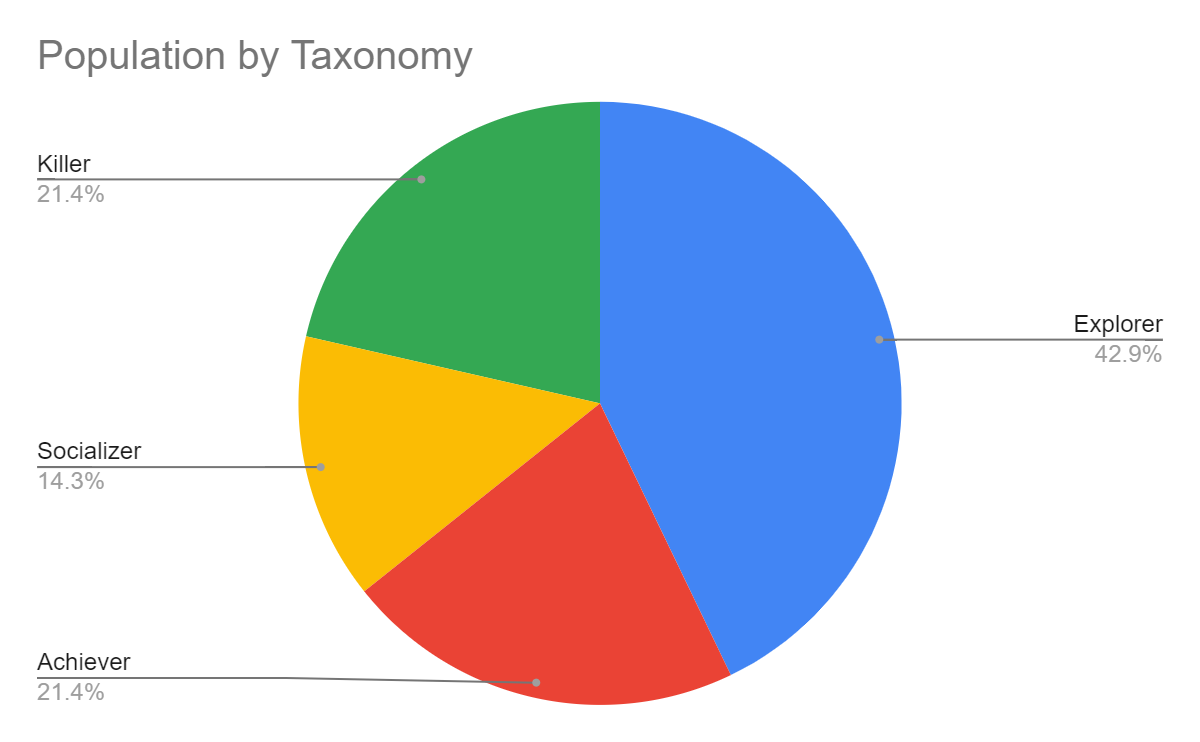
We recognized that the amount of participants of certain taxonomies is limited. It is important to note that Bartle Player Taxonomy does not necessarily categorize players evenly. Previous research by Schneider [3] shows that Explorer has the highest percentage of nearly 50%, while Killers and Socializers have a total of about 25%. With that said, our data shows that our participants with Explorer have a dominant percentage in line with Schneider [3], as shown in Appendix 5. One possible reason is that we primarily reached out to other students from within the Game Science and Design program at Northeastern University. A further study on player taxonomy in relation to their education program and highest degree might reveal more information to explain this.
Because of our intention to capture every opinion of the participants, we deliberately designed our interview process to have some flexibility. However, we noticed that interviewers executed the process differently. Some interviews are done entirely following the list of questions, while others have much higher allowances on what to ask during the follow-up questions and the degree of freedom on discussion topics the participants can talk about. Thus, interview answers are subject to these influences. Further research with more sophisticated and rigorous interview process alignment may have improved integrity and stability during interviews. Due to time constraints, we weren’t able to validate the reliability of our result by combining and labeling codes from each interviewer to calculate Cohen’s Kappa.
Our research focused on qualitative analysis of player behavior regarding puzzle-solving game approaches. Its interpretation, mainly on the coding process, is subject to objective interpretation. Similarly, designed research has the potential to be quantitative. A further research direction can be about quantizing player approaches by assigning each action from the players with scores.
In addition, our analysis solely focused on the primary taxonomy of each subject. However, Bartle Player Taxonomy shows a percentage for all four categories for each subject. We recognize that if the secondary, tertiary, and quaternary taxonomies were to be included, there could be opportunities for future research. One approach is to combine the percentage number and a preference score mentioned in the previous paragraph to formulate more sophisticated quantitative research.
8. Conclusion
Our study examined how players were categorized by the Bartle Taxonomy approach and engaged in the game The Witness. Killers prioritized competition and mastery, frustrated by perceived limitations in controls and a desire for more explicit goals. Explorers, driven by curiosity and a sense of autonomy, sought tangible rewards and recognition for their discoveries. Achievers favored logical reasoning and clear objectives, expressing a need for well-structured puzzles and a balanced difficulty progression. Socializers lacked opportunities for social interaction within the game, highlighting the need for collaborative or community-driven elements in puzzle games designed for this player type. We used these findings to offer insights for developers seeking to create more engaging and inclusive puzzle game experiences tailored to the diverse motivations and preferences of players, and for researchers to derive and validate in the future.
References
[1] Nacke LE, Bateman C, Mandryk RL. BrainHex: A neurobiological gamer typology survey. Entertainment computing. 2014;5(1):55-62. doi:10.1016/j.entcom.2013.06.002
[2] Caillois R. Man, Play, and Games. In: New York, NY: The Free Press of Glencoe Il, 1961. IX & 208 Pp. ; 1961:IX&208-IX&208.
[3] Schneider, M.O., Tiemi, É., Moriya, U., Silva, A.S., & Néto, J.C. (2017). Analysis of Player Profiles in Electronic Games applying Bartle’s Taxonomy.
[4] Bartle, Richard. "Hearts, clubs, diamonds, spades: Players who suit MUDs." Journal of MUD research 1.1 (1996): 19.
[5] Quick JM, Atkinson RK, Lin L. Empirical Taxonomies of Gameplay Enjoyment: Personality and Video Game Preference. International journal of game-based learning. 2012;2(3):11-31. doi:10.4018/ijgbl.2012070102
[6] Santos ACG, Oliveira W, Hamari J, et al. The relationship between user types and gamification designs. User modeling and user-adapted interaction. 2021;31(5):907-940. doi:10.1007/s11257-021-09300-z
[7] Lopez CE, Tucker CS. The effects of player type on performance: A gamification case study. Computers in human behavior. 2019;91:333-345. doi:10.1016/j.chb.2018.10.005
[8] Brocklebank S, Lewis GJ, Bates TC. Personality accounts for stable preferences and expectations across a range of simple games. Personality and individual differences. 2011;51(8):881-886. doi:10.1016/j.paid.2011.07.007
[9] CHI PLAY '16: Proceedings of the 2016 Annual Symposium on Computer-Human Interaction in Play Pages 229 - 243 https://doi.org/10.1145/2967934.2968082
[10] Klock ACT, Gasparini I, Pimenta MS, Hamari J. Tailored gamification: A review of literature. International journal of human-computer studies. 2020;144:102495-. doi:10.1016/j.ijhcs.2020.102495
Appendices
Appendix 1: Interview Question List
- Can you describe your first impressions of the game?
- What attracts your attention in the environment?
- What are the puzzles you encountered?
- What gameplay elements stood out to you the most?
- Did you feel any sense of familiarity or connection to the game's aesthetics or mechanics?
- How did you approach the puzzles you encountered?
- Can you describe your strategies or techniques to approach puzzles?
- What did you notice in the game that helped you solve the puzzles?
- How did you decide where to go? How did you decide what puzzles to attempt?
- Were there any specific features of the environment or puzzles that attracted you?
- How would you describe your priority while exploring the environment and completing puzzles?
- Can you share some of the thoughts and observations you made while playing the game?
- Were there any specific moments where you felt particularly strong? (ie engaged or challenged)
- If and when did you find yourself making connections between the puzzles and/or the environment?
Appendix 2: Playthrough Qualitative Analysis Data Table
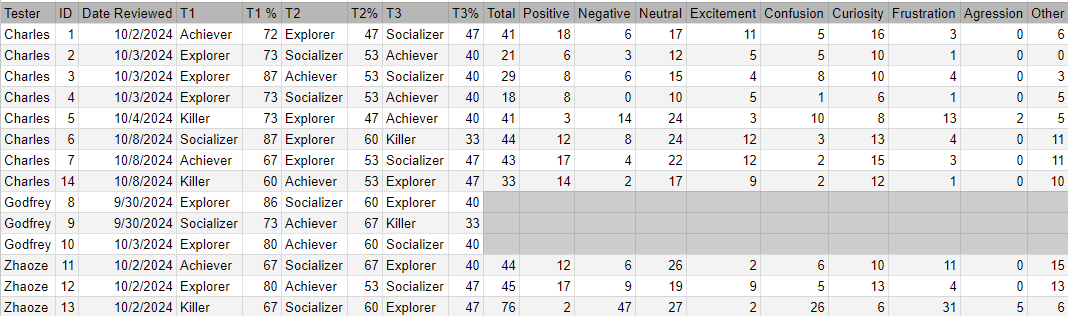
Appendix 3: Percentage of Comment Disposition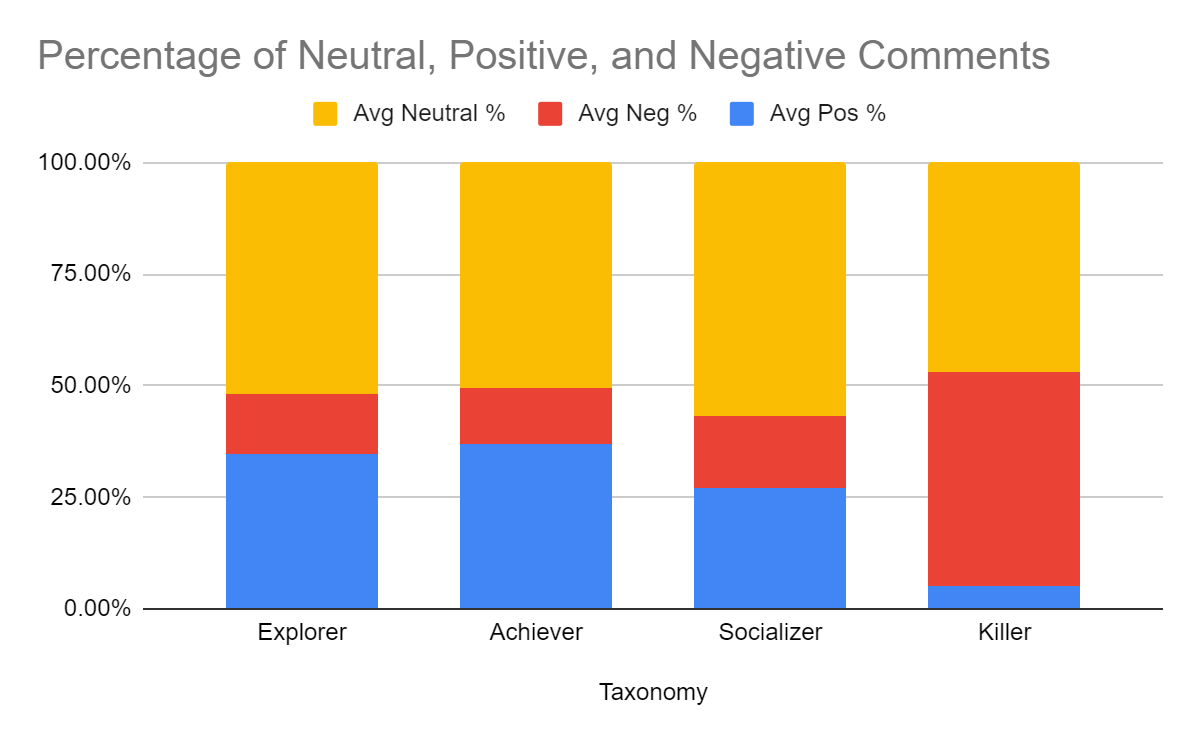
Appendix 4: Percentage of Taxonomy Sentiment in Play Session
Appendix 5: Population of Taxonomies
Appendix 6: Coding Results Table
Taxonomy | Categories | Dominant Subcategory | Codes | Example Quotes |
Killers | Design Perception | Game Mechanics | awkward movement, trapped | "How to move, so it kind of threw me off, and I couldn't like turn around." "Just not being able to jump just like broke my brain a little bit." |
Cognitive Process | Trial and Error | brute force, experimentation | "Some of it was brute force" "Because nothing else worked." | |
Emotional Responses | Detached | frustrated, annoyed, condescended, confused, disappointed, dislike, disoriented, forced, low drive to explore, reluctant to engage, unclear instructions, unimpressed, distaste | "... like you have to guess what the professor is thinking." "I feel like you just tell me, I don't have to try to figure it out." "I still don't know what I'm doing. " "I didn't say I liked the puzzles. I don't like the puzzles. " "Why are people paying to play this? " "What are you trying to make me do? And that felt like a waste of time" "It’s trying to fuck with me." "I didn't know you could go off-road. " "I thought this was the only road." "like, I don't want to figure out the mechanics behind it." | |
Agency and Goals | Dominance and Self-Efficacy | competitive, confident | "No, I'm way smarter for that. Oh." "I'll just do it. How am I doing? " "Well, don't, don't, don't tell me. I'll figure it out." "but I don't wanna give up now. It's so stupid. Fuck." "Like the last one kind of sucked, but I also know if I just put two more minutes in it, I can figure it out. " | |
External Influences | External Comparisons | connection to real life, comparison to other games, comparison to other players | "Interestingly enough. There is like a. Like a a CAPTCHA thing that I did the other day that you had to like. You were like timed, and you have to drag. The this like dot. That was on the puzzle piece to like complete the image. That's like a really lame comparison." "like the mazes on like. Cereal boxes and stuff they used to have. Mother used to have like. May's workbooks, or something" | |
Socializers | Design Perception | Game Mechanics | progression | "I could draw the the checkpoint drawer like the progression of difficulty in the puzzles. Leading to further into the castle workings. Yeah. Showed that I was on the right path" "and the bunker one, the bunker puzzle, is obviously more complex than those two, and it will take me a long time to solve it, and other than, there's a new mechanics, the white and black box, that I didn't know, like the triangle one, so I just decided to skip it," |
Cognitive Process | Trial and Error | brute force, experimentation | "I follow the breadcrumbs. I I would like to think, given that. I knew I saw the wires on the ground. Well, 1st I stumbled into the 1st wire. I then followed that wire back to the door." "Okay, so... I think the puzzles themselves. I think the visual hints are strong." | |
Emotional Responses | Detached | disoriented, confused, frustrated, disappointed, misled | "I couldn't understand the rules." "Okay. I do really wish that I could just jump down from there. That's. Annoying." "I would say that the tubes were kind of misleading." "Whereas in this Witness game, the rules are different for each level." | |
Agency and Goals | Self-Direction | uncovering secrets, exploration, discovery, contrarian | "So what I usually do is to literally sweep the entire map. (5:26) Run to the edge of the map. (5:29) Don't make it to the wall or some kind of barrier that stops you from moving around." | |
External Influences | External Comparisons | comparison to other games, comparison to real life experiences | "And then, I play Dark Echo because I like the aesthetics of it." "So I find the mechanism creative. (other game) It also has more of a darker vibe than I've preferred." "Where's My Water is simple." | |
Explorers | Design Perception | Puzzle Design | easy, counterintuitive, repetition | "maybe it isn't as intuitive as I thought" "It's one that's used quite a bit" "It's so simple" "But it keeps introducing, especially in the last part of my playthrough, that the way it's introducing new mechanics is beautiful." |
Cognitive Process | Perceptual Acuity | visual hints on puzzle, visual cues, environmental cues, audio cues, observation | "So I just try to observe all the things that happen. " "also like the tutorials about the visual effect." "Okay, so... I think the puzzles themselves. I think the visual hints are strong." "Like the dots I passed through become pale. And there are several dots." "There are white boxes and black boxes. And the direct light makes the black box look gray. And it's a change of color." | |
Emotional Responses | Detached | disappointed, confused, monotonous, overwhelmed | "It seems like there's a puzzle lying there. I'm not sure whether it's a reward. Okay." "But it doesn't give me any reward. " "(i gave up) because I didn't get any positive feedback" "I wasn't sure where to go" | |
Agency and Goals | Self-Direction | uncovering secrets, exploration, discovery, contrarian, rewards, adventure, breaking the game | "I didn't follow the main rule, I just go through that" "I think the secrets really make me conscious, make me excited." "I don't normally go for main paths, so I just thought about what path I want to take that's the gate telling me that I probably should go to the other path first, instead of the one I don't want to go to." "Because when I discover something by myself, I want to see what that goes. And that gives me a larger motivation than the designer's guide." | |
External Influences | External Comparisons | good mechanics | "But mechanics, I've definitely played a puzzle similar to that before" | |
Achievers | Design Perception | Game Mechanics | progression, clever design | "It's already like... After the new mechanic... This... I think that mechanic will... Like after... Yeah. Another half hour that mechanic will pop out. Yeah." "You can see the difficulties slowly increases. " |
Cognitive Process | Logical reasoning | learning from completed section, predictions, induction, working backwards | "Because by finding the new puzzle, I realized that I got a better sense about how these rules are supposed to operate." " I have maybe an association between finding hints in other parts of the game with solving a current puzzle. So, let's say that that will become a strategy moving forward" "Just like I mentioned. I like to do it the opposite way." | |
Emotional Responses | Detached | confused, frustrated, disoriented, disappointed, unclear instructions, unimpressed | "I couldn't understand the rules." "I don't know how to do this one." "I hate puzzles." "So I think it's really hard for me to sit through a puzzle without wanting to get it over with." | |
Agency and Goals | Self-Direction | exploration, freedom | "And all the towers have like kind of secrets there. So I believe there's somewhere I can go into." "Just wander around like that until you can find things." "I was just like. Here's an area. Let me like explore around, go into a little tower. " | |
External Influences | External Comparisons | comparison to other players | "How am I doing?" |