Hands Full: A Usability Study of Natural Locomotion in Fast-Paced VR Combat Games
Abstract
“Exploring the efficacy of natural locomotion (NL) techniques in virtual reality environments during high-intensity combat. This study evaluates physical movement as a primary navigation method in "Blade and Sorcery," measuring cognitive load, usability heuristics, and simulator sickness symptoms through SSQ metrics.
1. Abstract
Virtual Reality (VR) as a gaming medium has been swiftly growing, and many companies have invested much time, money, and energy into this medium [1]. The technology required to enter into the market of successful VR games has similarly become a focus of the industry. There are many bodies of scholarly work dedicated to the mitigation of motion sickness. In this study, we tested six subjects in a 15-minute play session of Blade and Sorcery, a Steam game featuring intense movement mechanics [2], while also utilizing Natural Locomotion (NL) [3]. Combining usability testing, the Simulator Sickness Questionnaire (SSQ), and think-aloud protocols, our study revealed usability challenges associated with NL in fast-paced VR combat gameplay.
2. Introduction
There are many bodies of scholarly work dedicated to the development and measurement of immersion and engagement. For this study, nausea is associated with motion sickness [4]. Chattha et al. [5] found that of 51 subjects tested, all had acute symptoms of motion sickness, and five had to discontinue the study in phase 1 due to severe motion sickness. It utilized the Simulator Sickness Questionnaire [2], which is a 16-symptom Likert scale ranging from 0-3, utilized in multiple published works [6][7][8][9]. Commercial VR games commonly feature one or several methods of locomotion that are available utilizing only a headset and set of controllers. These are done through controller-based movement, which is categorized as utilizing controller joysticks or directional pads to move continuously in one direction, teleportation-based movement, grabbing/climbing, or moving through space while in a static environment. Other methods exist that include physical movement, such as motion-based, typically walking-in-place, gesture-based and arm swinging, and roomscale-based, typically real walking through a room [10]. We seek to test the usability of Natural Locomotion as a possible alternative. Natural Locomotion is an application available on Steam that “emulates controller thumbstick input… to walk, run and jump more naturally, moving your arms or your feet” [3], making it a motion-based arm-swinging VR locomotion technique.
For this study, we are combining Natural Locomotion with a play session of Blade and Sorcery (Figure 1), a VR game available on Steam noted for its physics-based interactions that mimic real-world movements, such as grabbing an enemy's weapon mid-swing or pulling a cork from a potion bottle [2]. We chose this game for this study for two primary reasons. Firstly, its emphasis on realistic physicality synergizes well with the goals of Natural Locomotion. Secondly, the game's complex combat mechanics and intricate control scheme, which already demands precise button mapping, may present unique usability challenges when combined with Natural Locomotion. The conflict between hand movement for locomotion and the use of hands within the play of Blade and Sorcery provided a valuable opportunity to investigate the adaptability and potential limitations of this locomotion method in a demanding VR environment. Our primary research purpose is to determine whether Natural Locomotion increases usability through intuitive gameplay as well as measuring reduction in motion sickness symptoms in fast-paced VR combat games compared to traditional locomotion methods. We compared the reported SSQ results from our subjects to the rate of acute symptoms present in the related bodies of work testing the acuteness of Simulator Sickness symptoms.
3. Related Works
The virtual reality market has reached 25.11 billion dollars in 2023 and is projected to reach 244.84 billion in 2032 [1]. However, the problem of cybersickness is yet to be solved. Cybersickness, or simulator sickness, is motion sickness related to virtual environments. It has been a long-standing problem for years. Motion sickness in the real world is believed to have many reasons, including unpredictable movements [11], and work from Mazloumi Gavgani et al. shows that cybersickness is not physiologically different from motion sickness in the real world [12]. A prior review identified that the earliest report of simulator sickness was in 1958 from Bell Aircraft Corporation when testing helicopter simulators [13]. Video games are also known for inducing motion sickness [14]. Work from Laessoe et al. shows that head-mounted displays are even more likely to induce motion sickness [15].
The commonly used method for measuring the level of cybersickness is Simulator Sickness Questionnaire (SSQ) [4]. Other questionnaires have also been developed by Golding [16], Keshavarz [17], and Kim [18], etc. to measure different perspectives of motion sickness. With that said, a substantial body of prior research still employed SSQ as a standard measurement for the level of motion sickness [6][7][8][9].
One difficulty is that the likelihood of motion sickness differs by each person. Motion Sickness Susceptibility Questionnaire (MSSQ) by Golding is used to measure such likelihood [16]. It is also shown that such likelihood could be subjective to sex, visual/vestibular disparities, the users’ experience, expectations of their experience in VR, etc. [19][20].
SSQ, as a self-report questionnaire, relies on subjective answers from participants [4]. Thus, additional methods have been used to measure the level of motion sickness. Biometric data have been used in many forms. One commonly used method is eye tracking [21][22]. Other methods include measuring EKG [23], EEG [23][24], etc.
Measures have been developed to reduce motion sickness in VR [7][25][26]. Our focus is on movement methods in VR in relation to motion sickness. Existing movement methods in virtual reality can be concluded into (1) motion-based, (2) room scale-based, (3) controller-based, and (4) teleportation-based [10]. It has been shown that for all movement methods, motion sickness is not a neglectable problem [21][26][27][28]. However, the exact relationship between motion sickness in VR and movement methods has not been drawn. Some prior research showed that teleportation-based movement and the usage of an Omnidirectional Treadmill are less likely to induce motion sickness [27][29], while other research gives contradictory conclusions that teleport-based movement makes motion sickness more likely [30]. With that said, many other movement methods are less investigated.
4. Method
4.1 Study Design
We designed our study to evaluate the usability of NL in a fast-paced VR combat game. We chose Blade and Sorcery for its wide coverage of VR gameplay mechanics. The game's varied arm and head movements make it suitable for testing NL. The Meta Quest Pro was selected as our Head-Mounted Display (HMD) for its comfort and ease of use during initial testing.
We identified potential usability challenges related to integrating NL with Blade and Sorcery's control scheme, such as conflicts with existing controls, unintentional movements, preference for precision, and perceived intuitiveness.
NL's usability was assessed based on five heuristics [31]:
- Match between system and real-world
- User control and freedom
- Recognition rather than recall
- Error prevention
- Aesthetics and minimalist design
We divided gameplay into three categories: Movement, Fighting, and Miscellaneous (inventory, potion drinking, object interaction.) We evaluated Intuitiveness, Enjoyableness, and Frustration for each category.
The Simulator Sickness Questionnaire (SSQ) [4] measured participants’ motion sickness levels after gameplay sessions with NL.
4.2 Survey
To acquire a quantifiable measure of participant experience and heuristics, we developed the following survey.
1: Strongly Disagree | 2: Somewhat Disagree | 3: Neither Agree nor Disagree |
4: Somewhat Agree | 5: Strongly Agree | |
Questions | ||
1. I enjoyed playing the game. | 1 2 3 4 5 | |
2. Natural Locomotion was intuitive to use. | 1 2 3 4 5 | |
3. Natural Locomotion was enjoyable to use. | 1 2 3 4 5 | |
4. Natural Locomotion was frustrating to use. | 1 2 3 4 5 | |
5. I would have enjoyed the game more if I had been allowed to use a different way of moving. | 1 2 3 4 5 | |
6. I would have performed better at the game if I was allowed to use a different way of moving. | 1 2 3 4 5 | |
7. Walking and running action was intuitive to perform using Natural Locomotion. | 1 2 3 4 5 | |
8. Walking and running action was enjoyable to perform using Natural Locomotion. | 1 2 3 4 5 | |
9. Walking and running action was frustrating to perform using Natural Locomotion. | 1 2 3 4 5 | |
10. I would have enjoyed walking/running in the game more if I was allowed to use a different way of moving. | 1 2 3 4 5 | |
11. I would have performed better at walking/running in the game if I had been allowed to use a different way of moving. | 1 2 3 4 5 | |
12. Fighting actions were intuitive to perform using Natural Locomotion. | 1 2 3 4 5 | |
13. Fighting actions were enjoyable to perform using Natural Locomotion. | 1 2 3 4 5 | |
14. Fighting actions were frustrating to perform using Natural Locomotion. | 1 2 3 4 5 | |
15. I would have enjoyed fighting in the game more if I was allowed to use a different way of moving. | 1 2 3 4 5 | |
16. I would have performed better at fighting in the game if I had been allowed to use a different way of moving. | 1 2 3 4 5 | |
17. Natural Locomotion made other aspects of the game (grabbing items, climbing, swimming, etc.) more enjoyable. | 1 2 3 4 5 | |
18. Natural Locomotion made other aspects of the game (grabbing items, climbing, swimming, etc.) more frustrating. | 1 2 3 4 5 | |
19. My movement speed in the game corresponds well to how much effort I put into swinging my arms. | 1 2 3 4 5 | |
20. I felt in complete control of my movement with Natural Locomotion. (Start, stop, change direction, fight, etc.) | 1 2 3 4 5 | |
21. The controls of Natural Locomotion were easy to understand. | 1 2 3 4 5 | |
22. I didn't trigger accidental or unintentional movements with Natural Locomotion. | 1 2 3 4 5 | |
23. When I wanted to do something, Natural Locomotion did not hinder me. | 1 2 3 4 5 | |
24. Using Natural Locomotion did not distract me from the game experience. | 1 2 3 4 5 | |
Table 1. Survey for experience and heuristics
Questions 1 - 18 examined user satisfaction, and 19 - 24 are heuristic specific
4.3 Tasks
We developed a semi-structured 10 to 15-minute gameplay session divided into seven tasks.
- Identify an object of reference
- Navigate to said object
- Retrieve a two-handed sword
- Equip the two-handed sword
- Engage in a round of combat using the two-handed sword
- Navigate to a zipline
- Use the zipline to cross the canyon
These tasks cover most gameplay elements in VR combat games. A two-handed sword was selected specifically in anticipation of conflicts with arm movements required by NL.
4.4 Study Settings
Participants used the Meta Quest Pro with head and hand tracking. Gameplay and think-aloud audio were recorded. The gameplay session was conducted in a 2 x 2 meter enclosed area of a larger indoor space, under an operator’s observation.
4.5 Procedure
The study included six volunteers recruited from the cohort of the Game Science and Design Master’s program at Northeastern University. Participants were informed of the purpose of the study and the right to withdraw their consent at any moment. The procedure was explained to them step by step.
Before the gameplay session, the operator presented the protocol of the study. The protocol includes information on the aim of the study, the time of VR immersion, and the potential adverse effects of VR immersion. Participants were free to ask any questions. The operator then gave a brief overview of Blade and Sorcery and demonstrated how to walk forwards, backward, and sideways using NL.
Following the presentation, the HMD was fitted onto the participant. The HMD was connected via dedicated Wi-Fi to a PC with Blade and Sorcery and NL preconfigured. The operator worked with the participant to ensure adjustment to the VR environment and the correct fitment of the HMD.
During the gameplay session. The participant was asked to perform the seven tasks individually and verbalize their intention, enjoyment, and frustration. The participant was required not to deviate from the task provided. Variations in the sequence of tasks were considered on a case-by-case basis.
After the gameplay session, the participant was asked to complete the SSQ, followed by our survey.
4.6 Features Extraction
We failed to gather informative insight through an exploratory analysis of the transcribed think-aloud recordings.
We used the method introduced by Kennedy et al. [4] to calculate nausea (N), oculomotor disturbance (O), disorientation (D), and total simulator sickness (TS) scores. We then calculated the mean, mode, and standard deviation for each of the questions in our survey. All researchers discussed and analyzed the results using the context provided by audio recordings of gameplay and think-aloud.
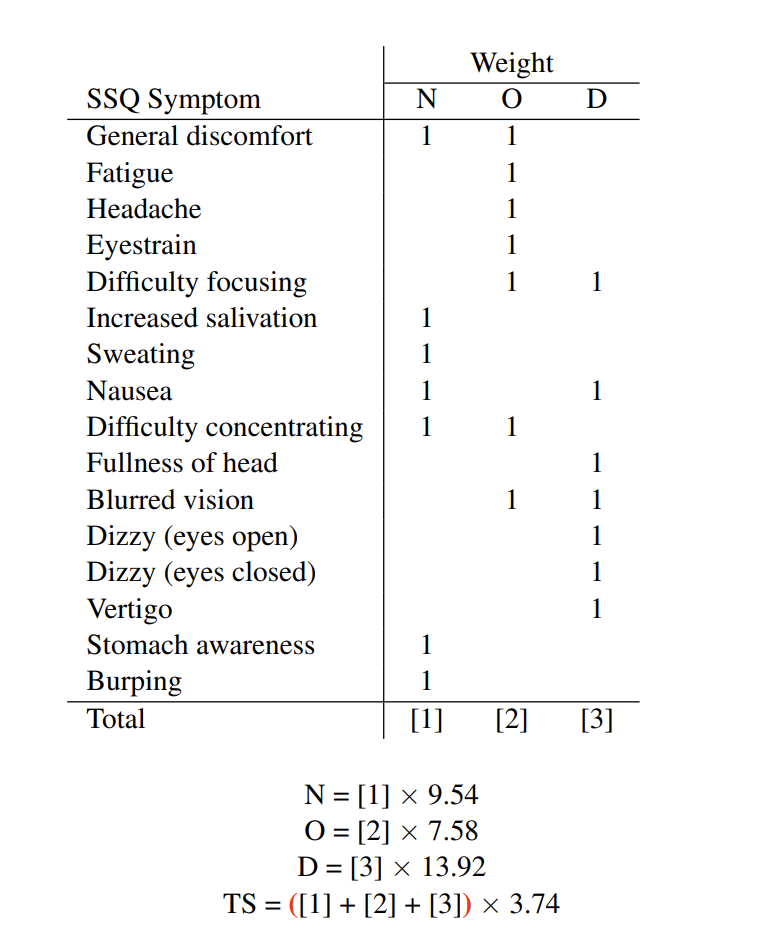
Table 2. Calculations for SSQ symptom scores [32]
5. Results
Table 3 contains the weighted result for each category for simulator sickness and the total simulator sickness score of each participant (subject).
Subject | Weighted N | Weighted O | Weighted D | Weighted TS |
1 | 67 | 76 | 111 | 93.5 |
2 | 38 | 23 | 14 | 29.9 |
3 | 67 | 38 | 28 | 52.4 |
4 | 10 | 23 | 56 | 29.9 |
5 | 10 | 30 | 14 | 22.4 |
6 | 38 | 23 | 0 | 26.2 |
SD | 23.3 | 18.9 | 37.3 | 27.1 |
Mean | 38.3 | 35.5 | 37.2 | 42.4 |
Table 3. SSQ results by participant
Q.No. | Category | Mean | Median | Mode | SD |
1 | Enjoyment Game | 4.5 | 4.5 | 5 | 0.55 |
2 | Intuitive NL | 2.8 | 2.5 | 2 | 0.98 |
3 | Enjoyment NL | 2.5 | 3 | 3 | 1.22 |
4 | Frustration NL | 3.7 | 4 | 4 | 0.52 |
5 | Enjoyment comparison NL | 4.0 | 4.5 | 5 | 1.26 |
6 | Blame NL | 4.0 | 4 | 5 | 0.89 |
7 | Enjoyment Moving | 3.0 | 3 | 2 | 1.10 |
8 | Intuitive Moving | 2.8 | 2.5 | 2 | 1.47 |
9 | Frustration Moving | 3.2 | 3 | 3 | 0.75 |
10 | Enjoyment comparison Moving | 3.8 | 4 | 5 | 1.17 |
11 | Blame Moving | 4.0 | 4 | 5 | 0.89 |
12 | Enjoyment Fighting | 3.2 | 3 | 3 | 1.33 |
13 | Intuitive Fighting | 3.2 | 3.5 | 4 | 1.17 |
14 | Frustration Fighting | 3.3 | 3.5 | 2 | 1.21 |
15 | Enjoyment comparison Fighting | 3.2 | 3 | 2 | 1.17 |
16 | Blame Fighting | 3.7 | 3.5 | 3 | 0.82 |
17 | Enjoyment Misc. | 4.0 | 4 | 4 | 0.63 |
18 | Frustration Misc. | 2.7 | 2.5 | 2 | 0.82 |
19 | Match between system and real-world | 3.5 | 4 | 4 | 1.38 |
20 | User control and freedom | 2.5 | 2 | 2 | 0.84 |
21 | Recognition rather than recall | 4.0 | 4 | 4 | 0.00 |
22 | Error prevention | 1.5 | 1 | 1 | 0.84 |
23 | User control and freedom | 2.2 | 2 | 2 | 0.98 |
24 | Aesthetics and minimalistic design | 2.8 | 3 | 3 | 1.60 |
Table 4. Experience (1 - 18) and heuristics (19 - 24) survey results
Table 4 contains the results of our own survey (Table 1). In categories with gray backgrounds, higher scores indicate a more negative user sentiment toward NL.
From Table 3, Total scores ranged from 22.4 to 93.5. Most participants exhibited some level of simulator sickness.
From Table 4, participants reported high enjoyment of the game (Mean = 4.5 on a 5-point scale) but low enjoyment of NL (Mean = 2.8, Mode = 2 on a 5-point scale). Participants blamed NL for unideal gameplay (Mean = 4.0, 4.0, 3.7 on a 5-point scale). Participants also reported NL as somewhat unintuitive (Mean = 2.8, 2.8, 3.2 mean on a 5-point scale).
Regarding heuristics, participants are unified in reporting ease of use (Mean = 4.0 on a 5-point scale, SD = 0, for Recognition rather than recall). Participants reported extremely low performance in error prevention (Mean = 1.5 on a 5-point scale) and low level of user control and freedom (Mean = 2.5, 2.2 on a 5-point scale). (Table 4)
6. Discussion
The overall player experience in VR games in relation to the control scheme is less shown in prior works. Our result, although lacking direct comparison, provides valuable data for furthering the investigation into VR game control schemes, cybersickness, usability, and overall experience.
6.1 Cybersickness
Subjects all experienced a certain degree of symptoms of motion sickness (TS > 20) [4]. However, total scores ranged from 22.4 to 93.5, with a standard deviation of 27.1, indicating high individual differences in motion sickness and a potentially high variance of motion sickness susceptibility. We also observe a low average total score (TS = 42.38), in which 4 out of 6 subjects reported TS < 30. Most participants only experienced a moderate to low degree of motion sickness. This indicates potentially high usability in terms of avoiding severe motion sickness, with non-negligible problems of individual differences. Our results did not show overall better SSQ scores compared to prior research [8][17][28][30].
Score for disorientation has the largest variation (SD = 37.1), while oculomotor disturbance has the smallest variation (SD = 18.9). One reason is that one subject is an outlier. One subject received a disorientation score of 111 and the highest score in each subcategory. This suggests that the subject potentially has a high motion sickness susceptibility.
When designing and testing our method, we noticed that continuous movements using the joystick in Blade and Sorcery will induce severe motion sickness to a level that will potentially make subjects completely unable to perform designated tasks. We decided not to include a direct comparison due to time constraints and practicality concerns. Although all participants exhibited a certain level of motion sickness, none terminated the gameplay session. Our results, compared to prior research [5][25][27], show that NL has the potential to reduce the likelihood of severe motion sickness.
6.2 Usability
Results from the survey show mixed experiences. The combination of Blade and Sorcery and Natural Locomotion delivers strong enjoyment (Mean = 4.5) in the game. NL delivers high enjoyment (Mean = 4.0) and high frustration (Mean = 3.7) at the same time. Although movement enjoyment using NL is also highly rated (Mean = 3.8), subjects are likely to blame NL for damaging their performance while playing (Mean = 4.0). Playing Blade and Sorcery using Natural Locomotion shows high scores in the overall experience, but NL is perceived to negatively affect the overall experience. These results demonstrate the need to further design and develop high immersion and low frustration control schemes in virtual reality environments, especially when rapid movements and actions are required.
The results also demonstrate several usability problems. One major problem exposed is error prevention. Error prevention received the lowest mean (Mean = 1.5) and relatively low variation (SD = 0.84), revealing a serious problem, demonstrating potentially low accessibility and higher chances of breaking the immersion. Another major problem is that subjects feel low freedom and control (Mean = 2.2). This is potentially problematic when precise movements are required.
Additionally, subjects are indifferent towards their enjoyment of NL (Mean = 3.0) and less intuitive when moving (Mean = 2.8), while opinions of each subject in the perspective of intuitiveness differ larger than in other questions, with the highest variability (SD = 1.47). Compared to movement and overall experiences, subjects also show relatively strong frustration (Mean = 3.3) and low enjoyment (Mean = 3.2) during fighting. Blade and Sorcery heavily relies on hand motions during fighting, and so does NL. This indicates that there could be improvements to reduce the motion load at the same time. It also shows that NL, as a non-realistic locomotion method, might not work well in VR games designed for realistic environments and control schemes.
6.3 Others
Two subjects fell into the water, and both experienced a certain level of confusion when trying to get out of the water, indicating the presence of inconsistency in the overall movement control schemes in games and in locomotion plugins. One subject reported uncomfortable feelings in their eyes and had to pause. The subject eventually completed the tasks.
7. Limitations
From a mechanical standpoint, the Simulator Sickness Questionnaire, despite its reach within the research body on simulation usability, needs several points of clarification. On the application of biometric data collection, we discovered complications in their application. The cognitive load of combining think-aloud play and Natural Locomotion alongside VR play ended up causing significant levels of cognitive overload. Finally, we found a significant issue with standardizing the play sessions, leading to differing levels of movement.
The Simulator Sickness Questionnaire has flaws in its calculation and evaluation. First, there is no definitive inclusion of brackets depicting the proper order of operations nor a clear example of scoring practices within the original paper, leading to several papers using inflated numbers and some significantly deflated. Additionally, there is very little guidance as to what are considered ‘acute’ symptoms, causing us to create a comparison between them rather than a definitive metric of sickness symptom severity.
For the biometric data, we initially had several application issues. The Varjo HMD we initially intended to utilize had significant issues preventing us from consistently tracking eye movements. The Shimmer devices we intended to use for blood pressure and heart rate tracking were not accurate nor consistent enough, causing significant artifacting throughout. Additionally, we did not create a specific enough play session that would enable us to be able to monitor eye movements sufficiently to enable us to get valuable information from the recording.
Subjects found it difficult to do all three of our primary tasks - Think aloud, NL, and VR combat, leading to frequent task switching between the three. As a result, we ended up with subjects reporting frustration trying to utilize all 3. Additionally, we determined that the think-aloud recording was not providing any valuable information outside of the lack of verbal feedback despite frequent reinforcement of the think-aloud process. We had multiple instances of subjects having to stop, speak about what they were doing, then re-engage with combat after lapsing in their activity.
As mentioned previously, the final physical issue that we encountered was standardization of gameplay experience. With such a complex game, it was difficult to replicate the exact same play experience for all subjects. For example, two subjects fell off of a high cliff into the water and drowned, whereas most other subjects did not have the same experience. As a result, we are forced to conclude that simulator-sickness-inducing events occurred at different times and with differing levels of severity for these subjects.
With a sample size of only six, this study serves as a pilot for future publication, as drawing meaningful quantitative conclusions from a Likert scale survey with such a limited sample is difficult. Demographic data were not collected. Participants’ prior VR exposure could provide additional insight into NL’s usability across different types of users.
The study's focus on a theoretical usage of NL in a lab setting may not reflect the average user experience. Usability challenges often arise during software setup in daily usage, a process not examined in this study. Furthermore, users in Steam reviews frequently reported blending NL with other VR locomotion techniques to alleviate motion sickness and address NL's usability challenges—a behavior not incorporated into the current study design. NL requires touch activation for input and offers key bindings for different HMD and controller setups. This variation in usability across HMDs was not examined.
Future research should incorporate more games to cover more VR gameplay scenarios. Blade and Sorcery covers a wide range of VR gameplay but lacks representation of gunplay - an example of a popular, fast-paced VR gameplay mechanic.
8. Conclusion
This study investigated the usability of NL in fast-paced VR combat games using a mixed-methods approach, combining think-aloud protocols, the Simulator Sickness Questionnaire (SSQ), and a user experience survey. Our findings reveal several usability challenges associated with NL. Participants reported NL as unintuitive and frustrating, particularly during locomotion and combat. The increased cognitive load of managing NL alongside the complex controls of Blade and Sorcery likely exacerbated the issue. The SSQ results showed symptoms of simulator sickness in all participants. Participants also reported a lack of error prevention and user control when using NL in this setting.
Despite the limitations and challenges encountered with biometric data collection and the think-aloud protocol, this study provides insights into the challenges of integrating NL with fast-paced VR games. Future research should explore these issues further with larger sample size and investigate potential mitigation strategies, such as refined control schemes or personalized NL settings, to improve user experience and reduce simulator sickness in fast-paced VR combat.
References
[1] Virtual reality [VR] market size, growth, share: Report, 2032. Virtual Reality [VR] Market Size, Growth, Share | Report, 2032. (n.d.). https://www.fortunebusinessinsights.com/industry-reports/virtual-reality-market-101378
[2] WarpFrog. (2024, June 17). Blade and Sorcery. https://store.steampowered.com/app/629730/Blade_and_Sorcery/
[3] Myou. (2018, April 7). Natural Locomotion on Steam. https://store.steampowered.com/app/798810/Natural_Locomotion
[4] Kennedy, R. S., Lane, N. E., Berbaum, K. S., & Lilienthal, M. G. (1993). Simulator sickness questionnaire: An enhanced method for quantifying simulator sickness. The International Journal of Aviation Psychology, 3(3), 203–220. https://doi.org/10.1207/s15327108ijap0303_3
[5] Chattha, U. A., Janjua, U. I., Anwar, F., Madni, T. M., Cheema, M. F., & Janjua, S. I. (2020). Motion sickness in virtual reality: An empirical evaluation. IEEE Access, 8, 130486–130499. https://doi.org/10.1109/access.2020.3007076
[6] Singla, A. (2024). Assessment of visual quality and simulator sickness for omnidirectional videos. Springer.
[7] Kaufeld, M., De Coninck, K., Schmidt, J., & Hecht, H. (2022). Chewing gum reduces visually induced motion sickness. Experimental Brain Research, 240(2), 651–663. https://doi.org/10.1007/s00221-021-06303-5
[8] Jang, K.-M., Kwon, M., Nam, S. G., Kim, D., & Lim, H. K. (2022). Estimating objective (EEG) and subjective (SSQ) cybersickness in people with susceptibility to motion sickness. Applied Ergonomics, 102, 103731. https://doi.org/10.1016/j.apergo.2022.103731
[9] Biernacki, M., Kennedy, R., & Dziuda, Ł. (2016). Simulator sickness and its measurement with simulator sickness questionnaire (SSQ). Medycyna Pracy, 67(4), 545–555. https://doi.org/10.13075/mp.5893.00512
[10] Boletsis, Costas. (2017). The New Era of Virtual Reality Locomotion: A Systematic Literature Review of Techniques and a Proposed Typology. Multimodal Technologies and Interaction. 1. 24. 10.3390/mti1040024.
[11] Kuiper, O. X., Bos, J. E., Schmidt, E. A., Diels, C., & Wolter, S. (2019). Knowing what’s coming: Unpredictable motion causes more motion sickness. Human Factors: The Journal of the Human Factors and Ergonomics Society, 62(8), 1339–1348. https://doi.org/10.1177/0018720819876139
[12] Mazloumi Gavgani, A., Walker, F. R., Hodgson, D. M., & Nalivaiko, E. (2018). A comparative study of cybersickness during exposure to virtual reality and “Classic” motion sickness: Are they different? Journal of Applied Physiology, 125(6), 1670–1680. https://doi.org/10.1152/japplphysiol.00338.2018
[13] Johnson, D. M. (2005). Introduction to and review of Simulator Sickness Research. PsycEXTRA Dataset. https://doi.org/10.1037/e456932006-001
[14] Stoffregen, T. A., Faugloire, E., Yoshida, K., Flanagan, M. B., & Merhi, O. (2008b). Motion sickness and postural sway in console video games. Human Factors: The Journal of the Human Factors and Ergonomics Society, 50(2), 322–331. https://doi.org/10.1518/001872008x250755
[15] Laessoe, U., Abrahamsen, S., Zepernick, S., Raunsbaek, A., & Stensen, C. (2023). Motion sickness and cybersickness – sensory mismatch. Physiology & Behavior, 258, 114015. https://doi.org/10.1016/j.physbeh.2022.114015
[16] Golding, J. F. (2006). Predicting individual differences in motion sickness susceptibility by questionnaire. Personality and Individual Differences, 41(2), 237–248. https://doi.org/10.1016/j.paid.2006.01.012
[17] Keshavarz, B., Murovec, B., Mohanathas, N., & Golding, J. F. (2021). The visually induced motion sickness susceptibility questionnaire (VIMSSQ): Estimating individual susceptibility to motion sickness-like symptoms when using visual devices. Human Factors: The Journal of the Human Factors and Ergonomics Society, 65(1), 107–124. https://doi.org/10.1177/00187208211008687
[18] Kim, H. K., Park, J., Choi, Y., & Choe, M. (2018). Virtual reality sickness questionnaire (VRSQ): Motion sickness measurement index in a virtual reality environment. Applied Ergonomics, 69, 66–73. https://doi.org/10.1016/j.apergo.2017.12.016
[19] Howard, M. C., & Van Zandt, E. C. (2021). A meta-analysis of the virtual reality problem: Unequal effects of virtual reality sickness across individual differences. Virtual Reality, 25(4), 1221–1246. https://doi.org/10.1007/s10055-021-00524-3
[20] Chang, E., Kim, H. T., & Yoo, B. (2020). Virtual reality sickness: A review of causes and Measurements. International Journal of Human–Computer Interaction, 36(17), 1658–1682. https://doi.org/10.1080/10447318.2020.1778351
[21] Nam, Y., Hong, U., Chung, H., & Noh, S. R. (2022). Eye movement patterns reflecting cybersickness: Evidence from different experience modes of a virtual reality game. Cyberpsychology, Behavior, and Social Networking, 25(2), 135–139. https://doi.org/10.1089/cyber.2021.0167
[22] Islam, R., Desai, K., & Quarles, J. (2021). Cybersickness prediction from integrated HMD’s sensors: A multimodal deep fusion approach using eye-tracking and head-tracking data. 2021 IEEE International Symposium on Mixed and Augmented Reality (ISMAR), 31–40. https://doi.org/10.1109/ismar52148.2021.00017
[23] Recenti, M., Ricciardi, C., Aubonnet, R., Picone, I., Jacob, D., Svansson, H., Agnarsdóttir, S., Karlsson, G. H., Baeringsdóttir, V., Petersen, H., & Gargiulo, P. (2021). Toward predicting motion sickness using virtual reality and a moving platform assessing brain, muscles, and heart signals. Frontiers in Bioengineering and Biotechnology, 9. https://doi.org/10.3389/fbioe.2021.635661
[24] Jang, K.-M., Kwon, M., Nam, S. G., Kim, D., & Lim, H. K. (2022a). Estimating objective (EEG) and subjective (SSQ) cybersickness in people with susceptibility to motion sickness. Applied Ergonomics, 102, 103731. https://doi.org/10.1016/j.apergo.2022.103731
[25] Zhao, G., Orlosky, J., Feiner, S., Ratsamee, P., & Uranishi, Y. (2023b). Mitigation of VR sickness during locomotion with a motion-based Dynamic Vision Modulator. IEEE Transactions on Visualization and Computer Graphics, 29(10), 4089–4103. https://doi.org/10.1109/tvcg.2022.3181262
[26] Lohman, J., & Turchet, L. (2022). Evaluating cybersickness of walking on an omnidirectional treadmill in virtual reality. IEEE Transactions on Human-Machine Systems, 52(4), 613–623. https://doi.org/10.1109/thms.2022.3175407
[27] Christou, C. G., & Aristidou, P. (2017). Steering versus teleport locomotion for head mounted displays. Lecture Notes in Computer Science, 431–446. https://doi.org/10.1007/978-3-319-60928-7_37
[28] Cmentowski, S., & Krüger, J. (2023). Tug & Swing: Traveling in virtual environments with point-tugging and arm-swinging. 2023 IEEE Conference on Games (CoG), 1–8. https://doi.org/10.1109/cog57401.2023.10333137
[29] Caputo, A., Zancanaro, M., & Giachetti, A. (2023). Eyes on teleporting: Comparing locomotion techniques in virtual reality with respect to presence, sickness and spatial orientation. Lecture Notes in Computer Science, 547–566. https://doi.org/10.1007/978-3-031-42286-7_31
[30] Yao, Q., Zhao, Y., Creem-Regehr, S. H., Stefanucci, J. K., & Bodenheimer, B. (2023). Does teleporting length affect spatial awareness? 2023 IEEE International Symposium on Mixed and Augmented Reality Adjunct (ISMAR-Adjunct), 126–130. https://doi.org/10.1109/ismar-adjunct60411.2023.00034
[31] Nielsen, J., & Molich, R. (1990). Heuristic evaluation of user interfaces. https://doi.org/10.1145/97243.97281
[32] Bimberg, P., Weissker, T., & Kulik, A. (2020). On the Usage of the Simulator Sickness Questionnaire for Virtual Reality Research. 2020 IEEE Conference on Virtual Reality and 3D User Interfaces Abstracts and Workshops (VRW). https://doi.org/10.1109/vrw50115.2020.00098